12 Houseplants That Actually Thrive in Low Light
No south-facing window? These low-light houseplants tolerate dim apartments, windowless offices, and north-facing rooms without stretching or fading.
Published · Updated · 8 min read
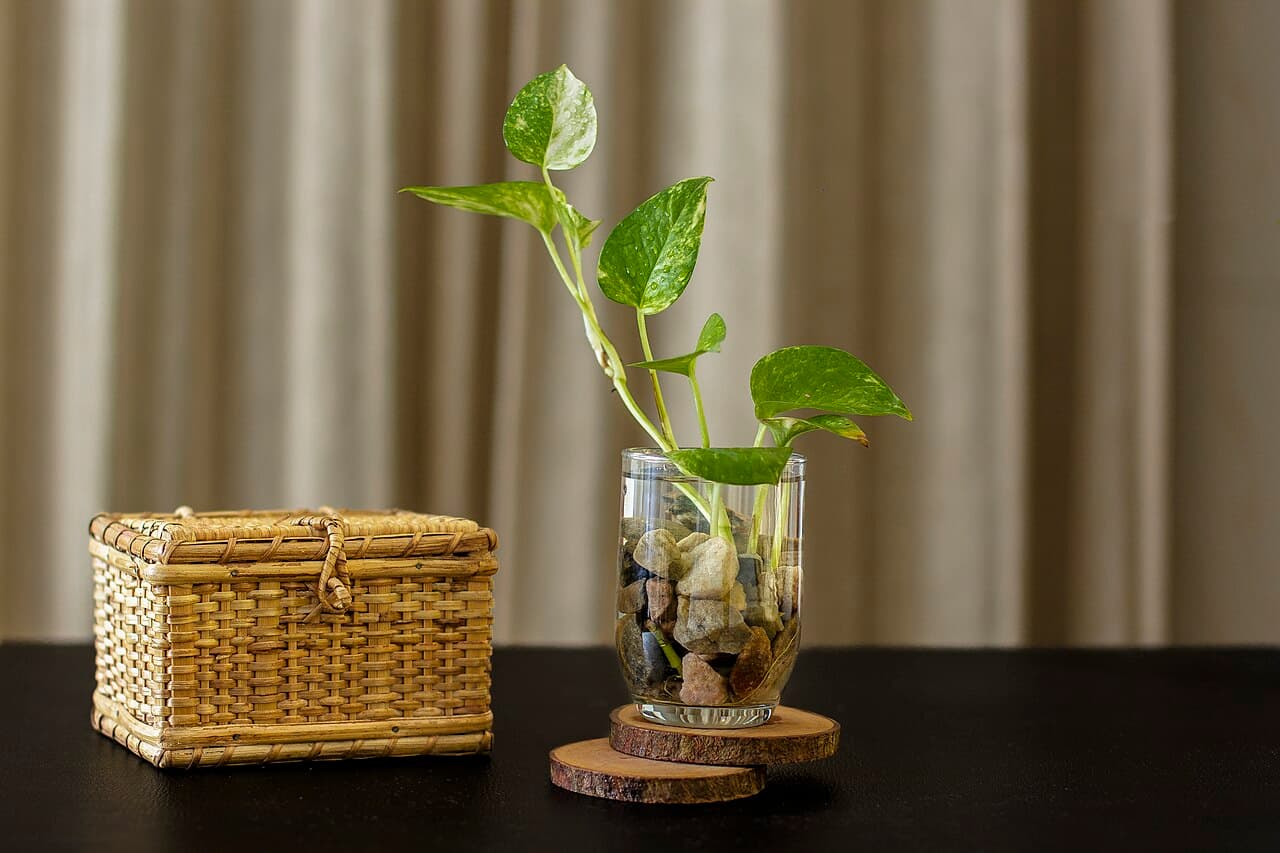
Photo: Devil's ivy - Cane Box by Jubair1985 (CC BY-SA 4.0)
What "low light" really means
Low light isn't the same as no light. It generally describes a spot several feet from an unobstructed window, or near a north-facing window, where you can comfortably read a book without turning on a lamp during the day. True darkness — closets, windowless interior rooms — can't sustain any plant long-term, no matter what a plant tag claims.
Cast iron plant (Aspidistra elatior)
True to its name, this plant tolerates neglect, low light, and irregular watering better than almost anything else sold as a houseplant. Growth is slow, which is exactly the trade-off you want in a dim spot — fast growers need more light to fuel that growth.
Snake plant (Dracaena trifasciata)
Snake plants store water in thick, upright leaves and handle both low light and infrequent watering. Their biggest risk in dim rooms is overwatering, since slower growth means slower water use — let the soil dry out completely between waterings.
ZZ plant (Zamioculcas zamiifolia)
Glossy, dark green leaves grow from potato-like rhizomes that store water and energy, letting the ZZ plant coast through weeks of low light and inconsistent care. It's one of the few plants that genuinely does well several feet from any window.
Pothos (Epipremnum aureum)
Pothos tolerates low light well, though solid-green varieties hold their color better in dim rooms than variegated types, which tend to lose their white or yellow patterning and revert to green when light is scarce.
Peace lily (Spathiphyllum)
Peace lilies flower less in low light but stay healthy and glossy, and they're refreshingly communicative about thirst — the leaves droop noticeably when it's time to water, then recover within hours of a good soak.
Chinese evergreen (Aglaonema)
Darker-leaved Aglaonema cultivars handle low light better than the pink or red-splashed varieties, which need brighter conditions to maintain their coloring.
Cat palm, Parlor palm, and Dracaena varieties
Parlor palm (Chamaedorea elegans) and Dracaena marginata both tolerate dim rooms while adding vertical structure that low-light plant collections often lack.
Setting expectations
Even the most shade-tolerant houseplant grows more slowly, produces smaller leaves, and rarely flowers in low light. That's normal, not a sign of failure — the trade-off for surviving where other plants can't is patience with a slower pace of growth.