The Beginner's Guide to Watering Houseplants Without Killing Them
Overwatering is the #1 houseplant killer. Learn how to read soil moisture, match watering frequency to plant type, and spot the early signs of root rot.
Published · Updated · 7 min read
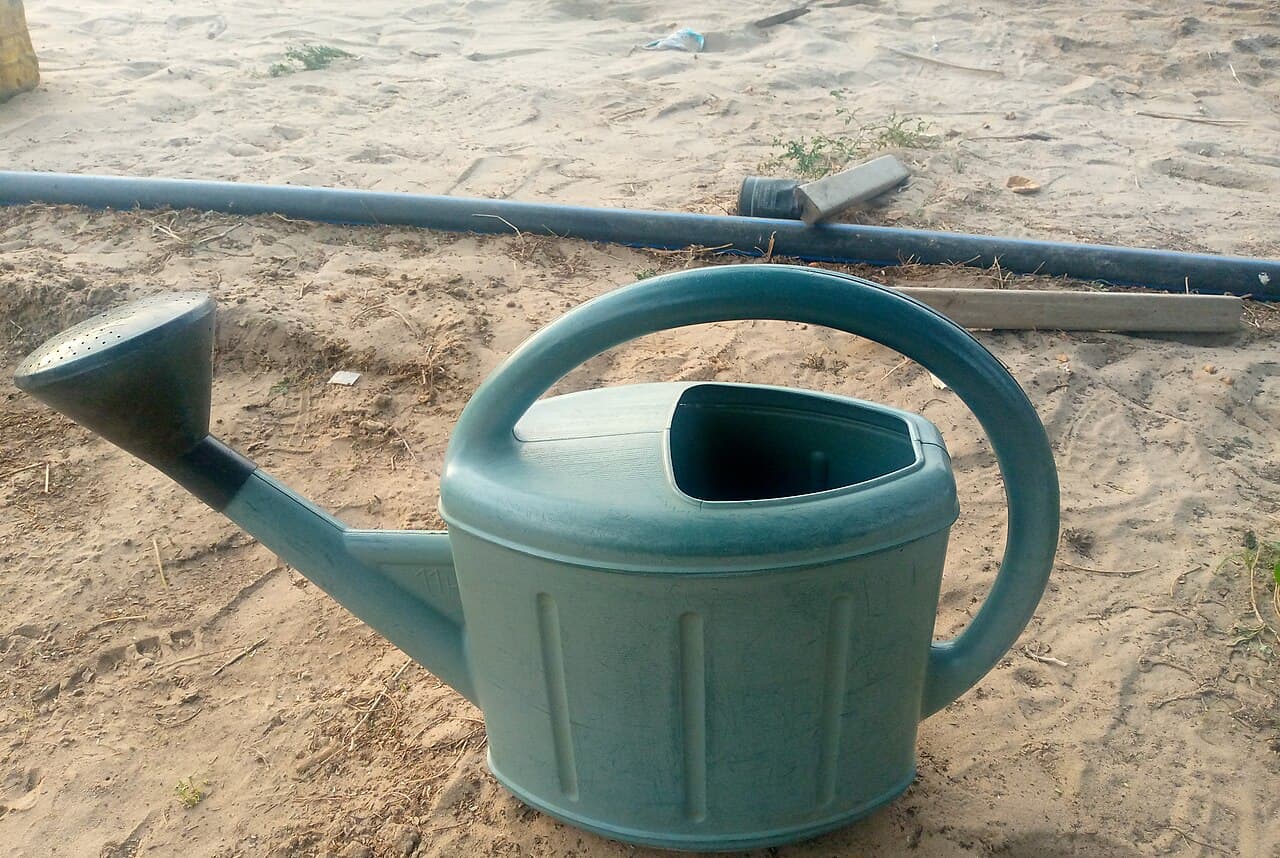
Photo: Arrosoir 2025 by Essodong (CC BY-SA 4.0)
Why watering on a schedule doesn't work
Most new plant owners water on a fixed schedule — every Sunday, every week, whatever feels tidy. The problem is that how fast soil dries out depends on light, humidity, pot size, pot material, and the season, none of which care what day it is. A pothos in a sunny window in July can dry out in three days. The same plant in a low-light corner in January might still be damp after two weeks.
The finger test, and why it beats gadgets
Before reaching for a moisture meter, stick a finger about two inches into the soil. If it comes out with soil clinging to it and feels cool or damp, wait. If it comes out clean and the soil feels dry and light, it's time to water. This single habit prevents the majority of watering mistakes, because it measures the thing that actually matters — moisture at root level — rather than surface appearance.
Match frequency to plant type
Succulents and cacti store water in their leaves and stems, so they want a thorough soak followed by a long dry-out — often two to four weeks between waterings. Tropical foliage plants like pothos, philodendron, and monstera prefer soil that dries out partway before the next watering, roughly every one to two weeks. Ferns and calatheas want consistently moist (not soggy) soil and will sulk if they dry out completely.
Signs you're overwatering
Yellowing lower leaves, a mushy or blackened stem base, a sour smell from the pot, and soil that stays wet for more than a week after watering are all red flags for root rot. Once roots sit in waterlogged soil, they're cut off from oxygen and begin to decay, which is why overwatered plants often look like they need *more* water — wilting leaves — when the opposite is true.
Signs you're underwatering
Crispy brown leaf edges, leaves that droop but perk back up within an hour of watering, and soil that pulls away from the sides of the pot all point to underwatering. Unlike root rot, underwatering is easy to fix and rarely fatal if caught early.
A routine that works
Check soil moisture weekly with the finger test rather than watering weekly. Water thoroughly until liquid runs from the drainage holes, then let the pot fully drain — never let it sit in a saucer of standing water. Adjust your checking frequency with the seasons: more often during active spring and summer growth, less often during fall and winter dormancy.