Why Are My Houseplant's Leaves Turning Yellow? A Diagnostic Guide
Yellow leaves can mean overwatering, underwatering, too much light, nutrient deficiency, or simple old age. Here's how to tell the causes apart.
Published · Updated · 6 min read
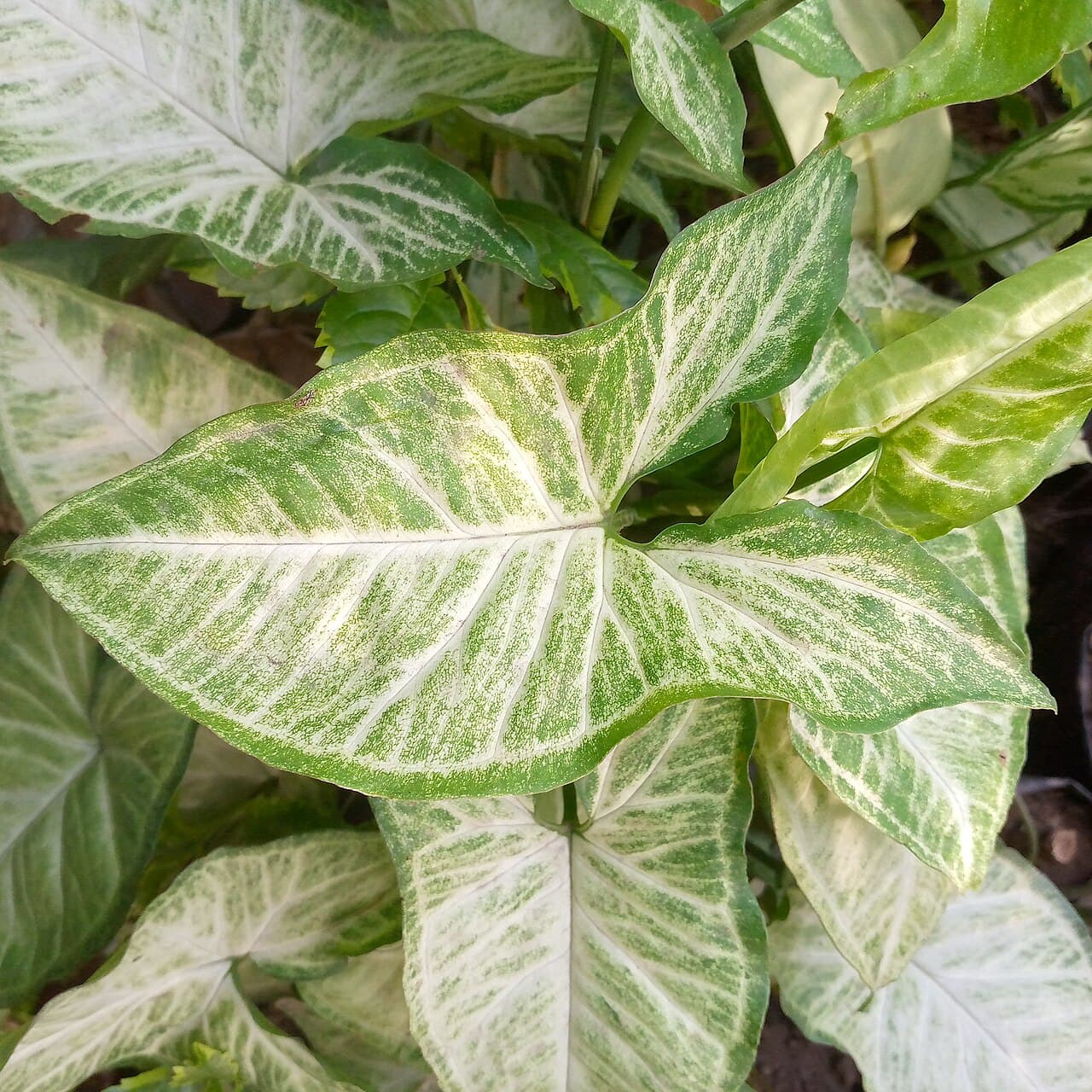
Photo: Syngonium podophyllum (Arrowhead plant) by Jeremyida002 (CC BY-SA 4.0)
Start with the pattern, not the color
Yellow leaves alone don't tell you much — where the yellowing appears, how fast it spreads, and what the leaf texture feels like narrow the cause down considerably. Note whether it's an isolated old leaf, several leaves at once, or a pattern that spreads from the edges inward or the veins outward.
Identifying Signs of Overwatering Your Houseplants
This is the most common cause. Lower, older leaves turn yellow first, the stem may feel soft near the soil line, and the yellowing is often accompanied by a mushy texture rather than crispiness. Check the roots if you can — healthy roots are white or light tan and firm; rotten roots are brown, black, or mushy.
Underwatering
Leaves yellow and then turn crispy and brown, often starting at the tips and edges. The soil will be bone dry and may have pulled away from the pot's edges. Unlike overwatering, the plant usually recovers quickly once watering resumes.
Too much direct light
Sun-sensitive plants like pothos, calathea, and peace lilies develop pale, washed-out yellow patches on leaves facing the light source, sometimes with brown scorch marks in the center of the yellow area. Moving the plant a few feet back from the window usually resolves it within a few weeks.
Nutrient deficiency
A general, uniform yellowing across the whole plant, especially in a plant that hasn't been fertilized in six months or more, often points to nitrogen deficiency. Yellowing between the veins while the veins themselves stay green suggests an iron or magnesium deficiency, which is more common in plants grown in the same soil for several years.
Natural aging
It's completely normal for a plant to shed its oldest, lowest leaf every so often as it grows new ones higher up. If only one leaf at a time turns yellow, it's solid green elsewhere, and the plant is otherwise producing healthy new growth, this is simply the plant's natural cycle — no intervention needed.
A quick decision path
One old leaf yellowing alone: normal aging, ignore it. Multiple lower leaves yellowing with soft stems: check for overwatering. Crispy yellow-to-brown leaves with bone-dry soil: underwatering. Pale yellow patches facing a bright window: too much direct sun. Uniform yellowing across an unfed plant: time to fertilize.