Repotting Houseplants: When It's Time and How to Do It Right
Learn the signs a houseplant has outgrown its pot, the best time of year to repot, and a step-by-step process that minimizes transplant shock.
Published · Updated · 7 min read
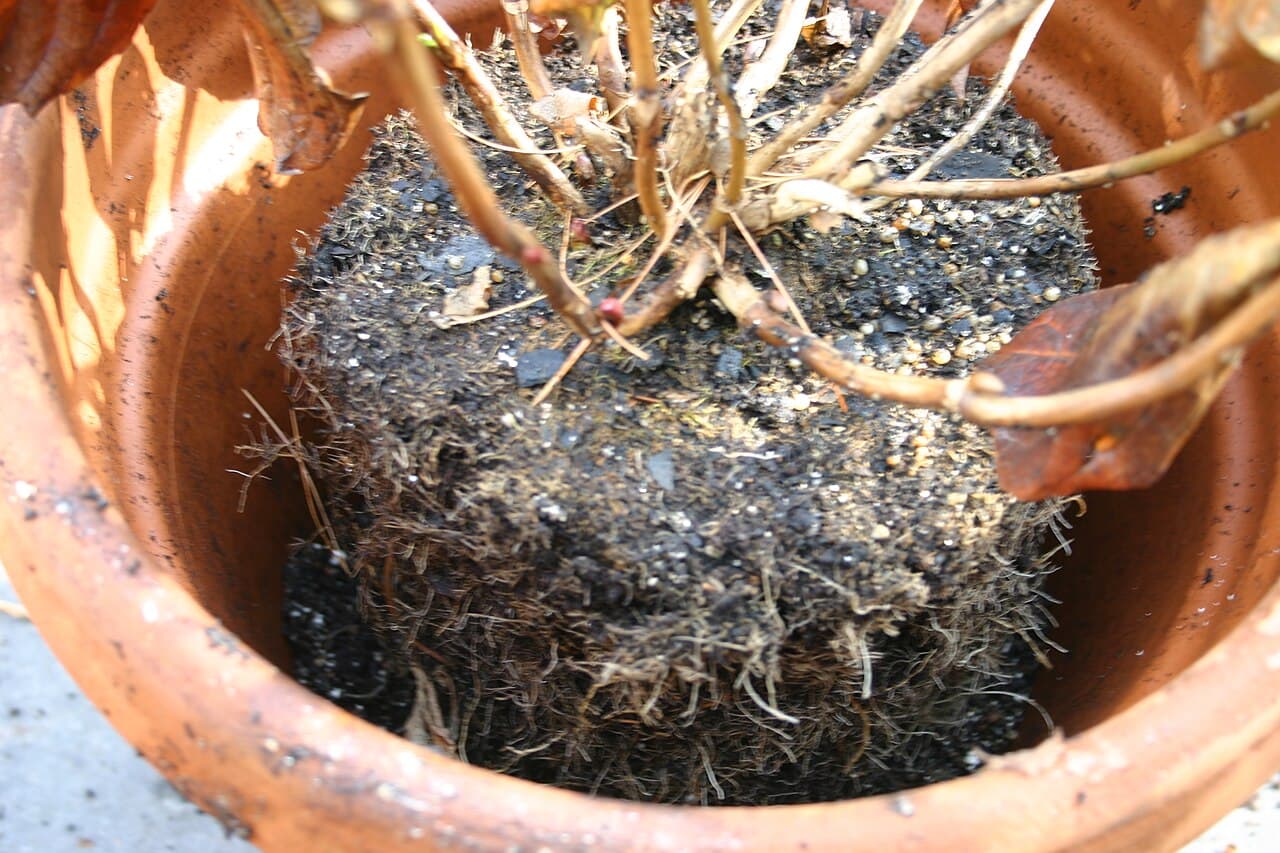
Photo: Hydrangea in a new pot at good depth by SB_Johnny (CC BY-SA 3.0)
Signs it's time to repot
Roots growing out of the drainage holes or circling visibly at the soil surface are the clearest signal. Other cues include water running straight through the pot without being absorbed, a plant that dries out much faster than it used to, and growth that has visibly slowed despite otherwise good care.
When repotting isn't necessary
A plant that's merely gotten taller, or one that was repotted within the last year, usually doesn't need a new pot — top growth outpacing the roots is normal and not, by itself, a reason to disturb the root ball. Repotting more often than needed can slow a plant down by forcing it to recover from root disturbance repeatedly.
Best time of year
Spring and early summer, when most houseplants are entering their active growth phase, is the ideal window. Roots recover fastest when the plant has the light and warmth to fuel new growth; repotting during fall or winter dormancy can leave a plant sitting in damp soil it isn't using, raising the risk of root rot.
Choosing the new pot
Go up one pot size, generally two inches in diameter, rather than jumping several sizes at once. An oversized pot holds far more soil than the roots can use, which stays wet for much longer and significantly increases the risk of root rot.
Step-by-step process
Water the plant a day before repotting so the root ball holds together and slides out more easily. Gently squeeze the sides of the old pot and ease the plant out rather than pulling on the stem. Loosen any tightly circling roots at the surface with your fingers. Add fresh soil to the bottom of the new pot, center the plant, fill in around the sides, and water thoroughly to settle the soil and eliminate air pockets.
After repotting
Expect a short adjustment period — a droopy leaf or two in the first week is normal transplant stress, not a sign of a mistake. Keep the plant out of direct sun and hold off on fertilizing for about four weeks, giving the roots time to settle into the new soil before asking them to take up nutrients.